Your pruning saw used to glide through branches like butter. Now it binds, drags, and leaves ragged cuts behind. If that sounds familiar, learning how to sharpen a pruning saw can save you hundreds of dollars and extend your tool’s life by a decade.
Most gardeners assume premium saws are disposable once dull. The truth is simpler: with a single diamond file and five minutes of work, you can restore nearly any blade to factory-fresh performance. This guide walks you through identifying your saw type, choosing the right tool, and using the fastest sharpening method trusted by arborists and home gardeners.
Identify Your Saw Type Before Sharpening
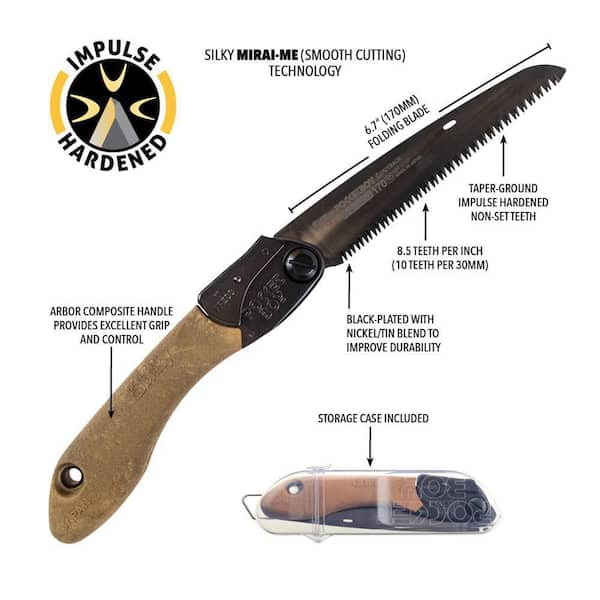
Knowing your blade’s construction determines which sharpening tool works and which wastes your time.
Check for Impulse-Hardened Teeth
Most modern pruning saws, especially Japanese models like Silky, use impulse hardening. This process hardens only the tooth tips for longer edge retention. The downside? Standard steel files cannot touch them.
- Signs of impulse hardening:
- No visible wear when filing with steel tools
- Manufacturer labels showing a crossed-out file symbol
-
High cutting efficiency when new, followed by sudden dulling
-
Non-hardened saws:
- Typically cheaper models from discount retailers
- Can be sharpened with standard triangular or mill files
- Dull faster but are easier to maintain with basic tools
Look for the Tri-Cut Tooth Pattern
High-performance blades feature a tri-cut tooth pattern with three cutting edges per tooth. This design slices wood cleanly with less effort and is common on Silky, ARS, and Fanno saws. Blades lacking this geometry tend to bind and wear out faster, even after sharpening.
Verify Whether Your Model Is Sharpenable
Some brands clearly mark sharpenable saws on their websites. Silky’s UK site uses a file-and-teeth icon on models like the Natanoko and Silky Fox. Fanno saws made in California are often designed to be sharpenable. ARS offers both hardened and sharpenable models, so check the current catalog or contact the manufacturer directly.
Pro Tip: When in doubt, ask the retailer: “Is this blade impulse-hardened or user-sharpenable?”
Choose the Right Sharpening Tool
Using the wrong file wastes time and risks damaging your blade.
Use a Diamond Flat File for Hardened Teeth
For impulse-hardened teeth, only diamond abrasives work. Standard files will glide over the surface doing nothing.
- Recommended tool: DMT Diamond Flat File (3″ x 8″)
- Cuts hardened steel and carbide
- Durable, long-lasting surface
-
Easy to handle and store
-
Alternative: Diamond stone or diamond-coated paddle file
- Smaller surface area, slower results
- Useful for quick field touch-ups
What to avoid:
– Triangular files (inefficient for hardened tri-cut teeth)
– Mill bastard files (useless on hardened steel)
– Rotary tools with grinding bits (risk of overheating)
For Non-Hardened Saws, Standard Files Work
Cheaper, non-hardened blades accept traditional tools. A mill file works for side filing, while a triangular file handles tooth-by-tooth work. These saws often lack tri-cut geometry and may not perform as well even when freshly sharpened.
Flat Filing Method: The Fastest Way to Sharpen
This technique takes under five minutes, sharpens all teeth evenly, and requires no angle-matching. It is the best method for impulse-hardened pruning saws.
Lay the Blade Flat
Place the saw blade on a stable, level surface like a workbench or table. Ensure it won’t shift during filing. For folding saws, extend and lock the blade fully.
- Visual cue: The flat sides of the blade should lie flush with the surface.
- Avoid: Curved or uneven surfaces that tilt the blade.
Apply the Diamond File
Position the DMT diamond file flat across the entire width of the blade, covering multiple teeth at once.
- Hold the file with both hands.
- Keep it perfectly flat against the side of the blade with no tilting.
- Apply firm downward pressure, slightly favoring the edge where teeth meet the blade.
Stroke Along the Blade
Push the file in long, steady strokes from the base to the tip of the blade.
- Use full-length motions (at least 6 inches) for even contact.
- Repeat 10 to 15 times per side.
- Focus on abrading the tooth tips, which sit flush with the blade edge.
What to look for: A slight metallic shine along the edge where material has been removed.
Flip and Repeat
Turn the saw over and repeat the process on the opposite side.
- Same number of strokes
- Same pressure and motion
- Goal: uniform wear on both sides
Test the Edge
After sharpening both sides, test the saw on a green branch 1 to 2 inches thick.
- Success signs:
- Starts easily with light pressure
- Cuts smoothly without binding
-
Produces clean shavings rather than dust
-
Still dull? Repeat 5 to 10 more strokes per side.
Why this works: The tri-cut tooth tips sit flush with the blade edge. Filing the flat side simultaneously sharpens all teeth, resetting their cutting points without per-tooth precision.
Why Tooth-by-Tooth Sharpening Falls Short
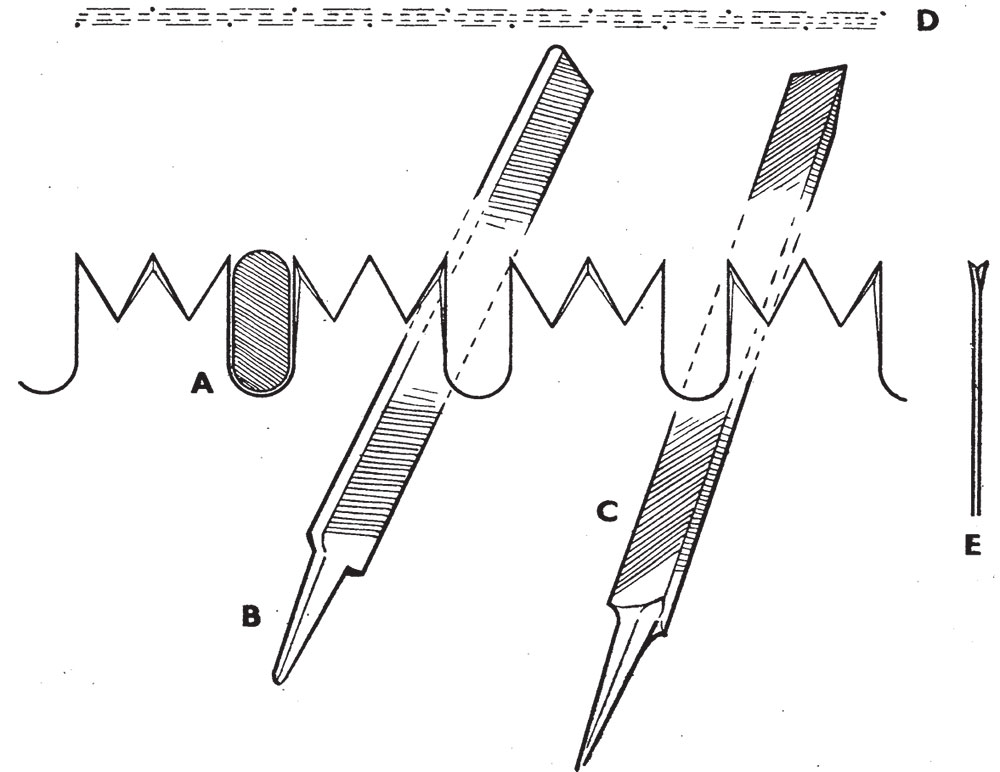
Traditional tooth-by-tooth sharpening is impractical for modern pruning saws.
The Time Problem
- Each tooth has three cutting edges
- A 330mm blade may have 60 or more teeth, creating 180+ edges to file
- The process takes 30+ minutes for marginal gains
- Maintaining consistent angle and depth is difficult
When It Might Still Apply
- Antique or specialty saws with unique tooth patterns
- Blades with damaged or misaligned individual teeth
- Users without access to diamond files (not recommended)
Bottom line: For mass-produced tri-cut saws, flat filing with a diamond file is faster, more consistent, and equally effective.
Troubleshoot Common Sharpening Problems
Fix issues that prevent proper sharpening or cutting performance.
Saw Binds in Thick Wood
Possible causes:
– Dull teeth (most common)
– Inferior blade design lacking tri-cut geometry
– Low-quality steel common in some imports
Solutions:
– Try sharpening with a diamond file first
– If binding persists, consider replacing with a high-quality tri-cut model
Standard File Does Nothing
Cause: Impulse-hardened teeth resisting steel abrasives.
Fix: Switch to a diamond file immediately. Continuing with a steel file damages the tool and wastes your time.
Uneven Cutting After Sharpening
Cause: One side filed more than the other, or blade not held flat.
Fix:
– Refile both sides with equal strokes
– Use a flat surface and check file alignment
– Avoid tilting the file during strokes
Maintenance Tips for Longer Blade Life
Smart habits between sharpenings keep your saw cutting cleanly for years.
Avoid Cutting Into Dirt or Roots
The leading cause of premature dulling is contact with soil, sand, or buried wood. These abrasives wear down even hardened teeth fast.
- Clear debris before cutting
- Look for dirt packed in the gullets during field checks
Store Your Saw Properly
- Folding saws: close and store in a dry place
- Fixed blades: use a sheath or wrap in cloth
- Avoid tossing loose into toolboxes or bags
Clean the Blade Occasionally
Resin and sap buildup affects cutting performance over time.
- Wipe with a cloth dampened with rubbing alcohol
- Use a soft brush for gullets
- Do not soak or use water excessively
Home User vs. Professional Strategy
Sharpening makes economic sense for most users, but not all.
For Home Gardeners
- Usage: Occasional pruning, a few hours per year
- Blade lifespan: 8 to 10+ years with sharpening
- Cost benefit: One $30 diamond file saves $100+ in replacement blades over a decade
- Verdict: Sharpen it. It is fast, cheap, and effective
For Professional Arborists
- Usage: Daily cutting, 7 months per year
- Blade replacement cycle: Every 3 weeks
- Time cost: At $150/hour crew rate, 5 minutes of sharpening equals $12.50 in labor
- Alternative: Swap blade in seconds, sharpen later or discard
- Some pros switch to chain saws for faster chain maintenance
Key insight: Professionals prioritize speed over blade cost. For everyone else, sharpening wins.
Where to Buy Sharpenable Saws

Choosing the right saw from the start saves frustration later.
Oesco: Industry-Trusted Source
- Specializes in tools for growers and landscapers
- Filters for “Sharpenable” pruning saws
- Carries both impulse-hardened and user-serviceable models
- Supplying the industry since 1954
Harbor Freight: Budget Option
- Sells inexpensive saws likely made with non-hardened steel
- Easy to sharpen with standard files
- Lower cutting performance, best for light infrequent use
Direct from the Manufacturer
- Check the UK Silky website for file icons indicating sharpenable models
- Contact ARS or Fanno support to confirm sharpenability
- Ask: “Is this blade impulse-hardened or designed for user sharpening?”
Frequently Asked Questions About Sharpening a Pruning Saw
Can you sharpen an impulse-hardened pruning saw?
Yes. Despite the common belief that impulse-hardened blades are disposable, diamond files can abrade the hardened tooth tips and restore cutting performance. The flat filing method takes about five minutes and sharpens all teeth at once.
What file do you use to sharpen a pruning saw?
Use a diamond flat file for impulse-hardened blades. The DMT Diamond Flat File (3″ x 8″) is highly recommended. Standard steel files cannot cut hardened steel and will only wear out quickly.
How often should you sharpen a pruning saw?
For home gardeners, sharpening every few years is usually enough since quality blades last 8 to 10+ years. Professionals who cut daily may sharpen weekly or simply replace blades every 3 weeks.
Is it worth sharpening a cheap pruning saw?
It depends on the blade quality. Cheap non-hardened saws sharpen easily but may lack tri-cut geometry, so even a sharp edge performs poorly. Investing in a quality sharpenable saw and a diamond file delivers better long-term value.
How do you know when a pruning saw is too dull to sharpen?
When the blade has lost significant material from the tooth tips or shows visible damage like broken or missing teeth, replacement is the better option. Flat filing works only when tooth tips remain flush with the blade edge.
Can you sharpen a Silky pruning saw?
Yes. Although the US Silky website often lacks clear labeling, the UK site marks certain models as sharpenable. Folding Silky saws like the Gomboy are not officially labeled sharpenable, but users report success sharpening them with diamond files.
Key Takeaways for Sharpening Your Pruning Saw
Learning how to sharpen a pruning saw is one of the most valuable skills a gardener can develop. The flat filing method using a diamond file works on nearly every modern blade, including impulse-hardened models once thought to be disposable. A single five-minute session restores cutting performance and extends blade life by years.
For home users, the math is simple: one $30 diamond file replaces decades of blade purchases. Keep your file in your shed, avoid cutting into dirt, and your pruning saw will serve you reliably for a decade or more. Start by checking your saw’s tooth pattern, grab a DMT diamond file, and bring that blade back to life today.