If you’ve ever ripped out old cabinets, cut through stubborn tree branches, or sliced pipes flush against a wall, you’ve felt the raw power of a reciprocating saw. This tool shows up on construction sites, in demolition crews, and even in emergency rescue vehicles because of its ability to chew through wood, metal, plastic, and masonry. But how does a reciprocating saw work? Unlike circular saws that spin or jigsaws that pivot, a reciprocating saw cuts with a rapid back-and-forth motion. This linear action turns electrical or battery power into intense cutting force that handles tough materials in tight spaces.
Understanding the inner workings of this tool helps you choose the right settings, avoid damage, and work more safely. It involves mechanical conversion of rotary motion, vibration control, and adjustable features that fine-tune performance. In this guide, we’ll break down the core mechanism, key components, and operational features that make the reciprocating saw one of the most adaptable power tools available.
The Core Mechanism That Powers the Cut
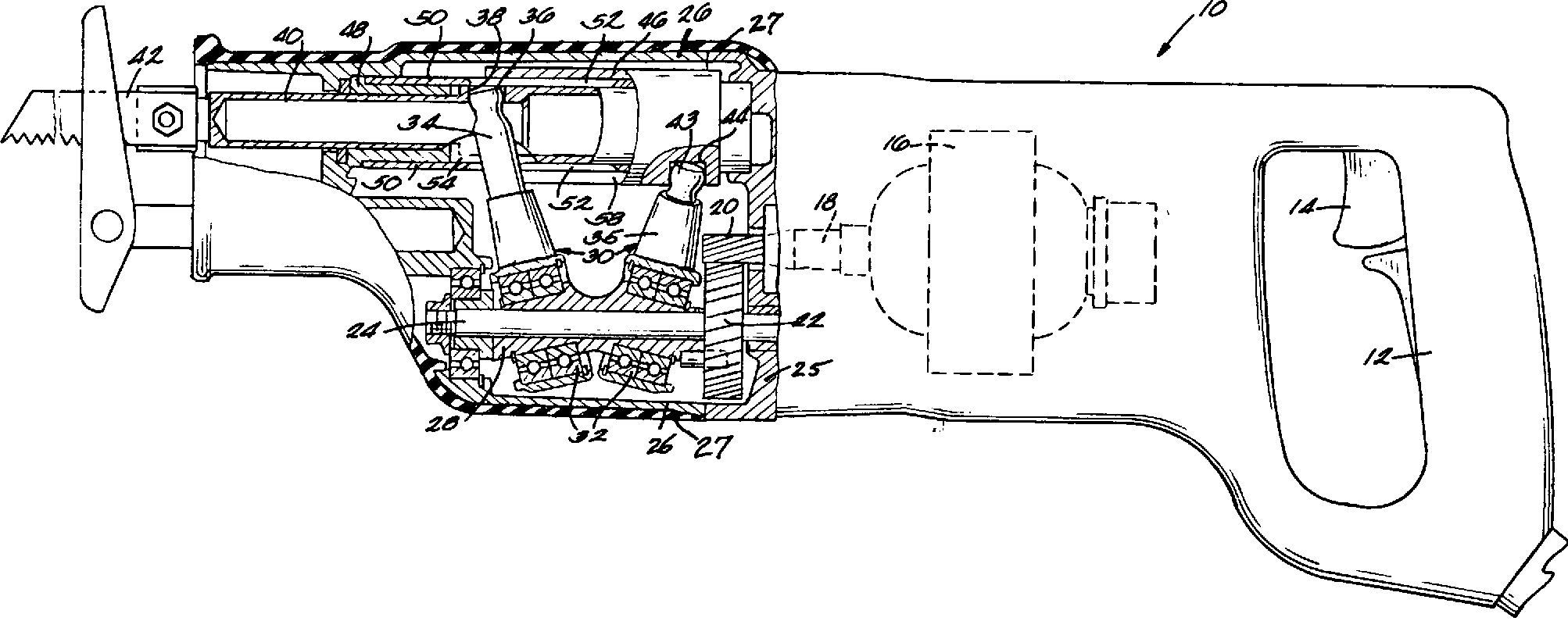
At the heart of every reciprocating saw lies a simple principle: converting the spinning motion of an electric motor into rapid back-and-forth blade movement. This transformation happens through one of several mechanical systems built inside the tool housing.
Swashplate Drive for Smooth Linear Motion
One of the most effective mechanisms in modern saws is the swashplate drive. In this design, a motor-driven plate sits at an angle on a rotating shaft. As the shaft spins, the angled plate pushes against a connecting rod, translating rotation into linear motion that drives the blade forward and back. The key advantage is minimal side-to-side vibration. Because the forces align along the blade’s axis, the tool stays stable in your hands, especially during extended use.
Crank and Scotch Yoke Alternatives
Some models use a crank mechanism or Scotch yoke system instead. A crank works like a piston in an engine, with a rotating crankshaft connected to a rod that pulls the blade back and forth. A Scotch yoke uses a sliding yoke attached to an eccentric pin, creating smooth linear motion. While effective, these systems need balance weights to counteract vibration. Without proper balancing, the saw becomes harder to control and leads to uneven cuts and user fatigue.
Cam and Eccentric Systems
Higher-end or specialized models may use a barrel cam or eccentric cam design. These rely on an off-center rotating component that pushes a follower, creating reciprocation. These systems allow precise stroke control and often appear in industrial tools. However, like crank systems, they can introduce vibration if not properly engineered.
Power Sources and Motor Types
Corded vs. Cordless Performance
Reciprocating saws come in both corded and cordless versions, each with trade-offs. Corded models plug into a power outlet and deliver consistent, high-speed operation ideal for long demolition jobs. They typically offer higher no-load speeds and sustained power without battery downtime.
Cordless models run on lithium-ion batteries and prioritize portability. They work well for roofers, window fitters, or rescue workers who need to operate far from outlets. While slightly less powerful, modern battery technology has narrowed the performance gap significantly.
Variable Speed Control
Most reciprocating saws feature adjustable speed settings, either through trigger sensitivity or a dedicated speed dial. Trigger sensitivity means pressing the trigger harder increases speed, which is common in cordless models. A speed dial sets the maximum strokes per minute before pulling the trigger, often found on heavy-duty corded units.
This control lets you make delicate cuts in thin metal or aggressive demolition cuts in wood framing, all with the same tool.
Blade Motion: Reciprocating vs. Orbital Action
Standard Reciprocating Cut
By default, the blade moves straight back and forth in a linear reciprocating motion. This works well for clean, controlled cuts, especially in metal or when precision matters. The blade cuts on the forward stroke, then retracts to reset position.
Orbital Action for Faster Cuts
Many saws offer orbital action, an advanced feature that adds an up-and-down arc to the blade’s path. This creates an oval cutting pattern, with the tip moving up-and-down as well as back-and-forth. The blade lifts slightly on the return stroke, reducing friction and allowing faster material removal.
Pro Tip: Use orbital mode for pruning branches or demolition work. Turn it off for clean cuts in pipes or metal.
Blade Compatibility and Material Matching
Universal Shank Design
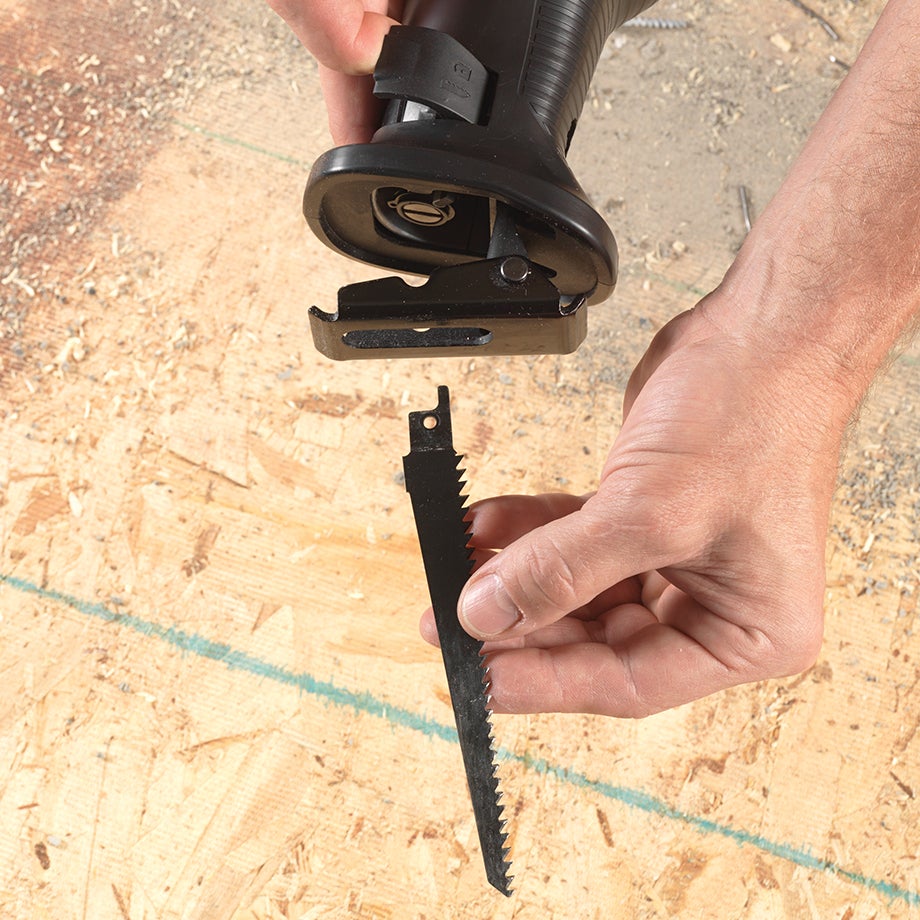
Most modern reciprocating saws use a keyless blade clamp system that allows quick swaps without tools. Blades lock in with a lever or twist mechanism, securing the shank design for stability.
Match Blade to Material
Using the right blade is critical. The wrong tooth pattern can overheat the blade or damage the workpiece.
Common blade options include:
- Metal cutting: Bi-metal blades with fine teeth
- Wood cutting: High-carbon steel with coarse teeth
- Drywall: Specialized blades with aggressive teeth
- Pipe cutting: Long demolition blades for mixed materials
- Masonry and tile: Abrasive-coated blades that grind instead of cut
Expert Note: Bi-metal blades balance durability and cost, making them the go-to choice for most jobs.
Key Features That Enhance Performance
Adjustable Shoe for Stability
The shoe is the metal plate near the blade base that rests against the workpiece. It stabilizes the saw and controls cutting depth. Most shoes are adjustable, letting you set how far the blade protrudes. Slide it forward to limit depth on thin materials or retract it for flush cuts against walls.
Vibration Reduction Systems
Because reciprocating saws generate intense motion, vibration is a major concern. Prolonged use can cause hand fatigue. Higher-end models include counterbalance mechanisms or dampened housings that absorb shocks, making the tool easier to control.
Tool-Free Blade Changes
Quick-release levers let you swap blades in seconds, which is critical when switching between materials. Always ensure the blade is fully seated and locked before cutting.
Common Uses and Applications
Demolition and Renovation
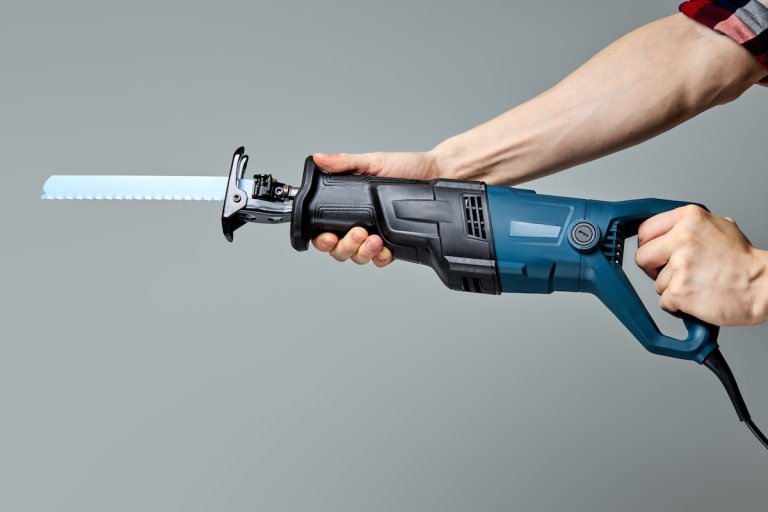
Reciprocating saws excel in tear-out work, such as removing cabinets, breaking down walls, or cutting nails in framing. Their aggressive action powers through mixed materials, making them ideal for remodelers.
Plumbing and HVAC
With long, narrow blades, these saws can cut pipes flush against floors or walls. Plumbers often use specialized attachments for clean, fast cuts in PVC, copper, or cast iron.
Emergency Rescue
Firefighters and rescue teams rely on reciprocating saws to cut through vehicle frames, doors, or debris during extrications. Their portability and power make them lifesaving tools in tight situations.
Landscaping and Tree Work
Gardeners and arborists use pruning blades to cut tree limbs or remove stumps. The orbital action helps slice through green wood quickly, even at awkward angles.
Safety and Best Practices
Secure the Workpiece First
Unstable materials can bind the blade, causing kickback. Clamp down lumber or pipes whenever possible.
Use Both Hands for Control
Hold the front handle and the main grip for stability. Never operate with one hand.
Let the Tool Do the Work
Forcing the saw increases strain on the motor and blade. Apply gentle pressure and let the teeth cut naturally.
Wear Proper Safety Gear
Always use:
- Safety glasses
- Hearing protection
- Gloves
- Dust mask for drywall or composite cutting
Warning: Never touch the blade immediately after use. It can be extremely hot.
Troubleshooting Common Issues
Blade Binding or Stalling
Too much pressure or a dull blade usually causes this. Ease off pressure, check blade sharpness, and ensure proper tooth count for the material.
Excessive Vibration
Worn internal components or an unbalanced mechanism often cause this. Inspect for damage, clean internal debris, or consider professional servicing.
Blade Won’t Stay Clamped
A worn clamp or incompatible shank usually causes this. Verify the blade type and clean the clamp mechanism.
Maintenance for Longevity
Clean After Each Use
Dust, metal shavings, and wood debris can clog the blade clamp and motor vents. Wipe down the tool and blow out vents with compressed air.
Lubricate Moving Parts
Occasionally apply light machine oil to accessible internal rails to reduce friction and wear.
Store Blades Properly
Keep blades in a dry container to prevent rust. Discard any that are bent, chipped, or excessively worn.
Frequently Asked Questions About Reciprocating Saws
What Is the Main Difference Between a Reciprocating Saw and a Jigsaw?
A reciprocating saw uses a longer, more aggressive blade designed for demolition and rough cuts. A jigsaw uses a shorter blade designed for curves and precision work in thinner materials.
Can a Reciprocating Saw Cut Metal?
Yes, with the right blade. Bi-metal blades with fine teeth (10 to 24 teeth per inch) work well for cutting metal pipes, nails, and thin steel.
What Is Orbital Action on a Reciprocating Saw?
Orbital action adds an up-and-down oscillation to the blade’s back-and-forth motion, creating an oval cutting pattern. This feature speeds up cuts in wood and is primarily used for pruning tree branches or wood demolition.
Why Does My Reciprocating Saw Vibrate So Much?
Vibration often comes from the drive mechanism. Crank, Scotch yoke, and eccentric cam designs need balance weights to reduce vibration. Swashplate drives produce less rotational imbalance, with vibration mostly aligned with the blade axis.
Are Reciprocating Saws Used Outside Construction?
Yes. Emergency rescue workers use them to cut through vehicle frames and debris. Gardeners and landscape architects use them for pruning. They also appear in surgery and dental surgery for cutting or grinding bone.
How Do I Choose the Right Blade?
Match the blade to the material. Use coarse-tooth blades for wood, fine-tooth blades for metal, and abrasive-coated blades for tile or masonry. Bi-metal blades offer the best balance of durability and cost for general use.
Key Takeaways for Understanding How a Reciprocating Saw Works
A reciprocating saw works by converting rotary motor power into rapid back-and-forth blade motion through mechanisms like swashplates, cranks, or cams. The swashplate drive offers the smoothest operation with vibration aligned to the blade axis, while crank and Scotch yoke systems need balance weights to stay controllable. Variable speed control, orbital action, and interchangeable blades make this tool adaptable across dozens of applications.
Whether you’re demolishing a wall, pruning a tree, or rescuing someone from a wreck, knowing how a reciprocating saw works turns raw power into precision. Start by matching the blade to your material, adjust the shoe for stability, and let the tool’s mechanism do the heavy lifting. Your next cut will be faster, cleaner, and safer.